The Matchcover Storyteller
It’s hard to believe that by 1955, ships had already been locking through Sault Ste. Marie past the St. Mary’s River & Falls since 1855, but here it was, the centennial celebration. But let’s look at the locks themselves before we celebrate.
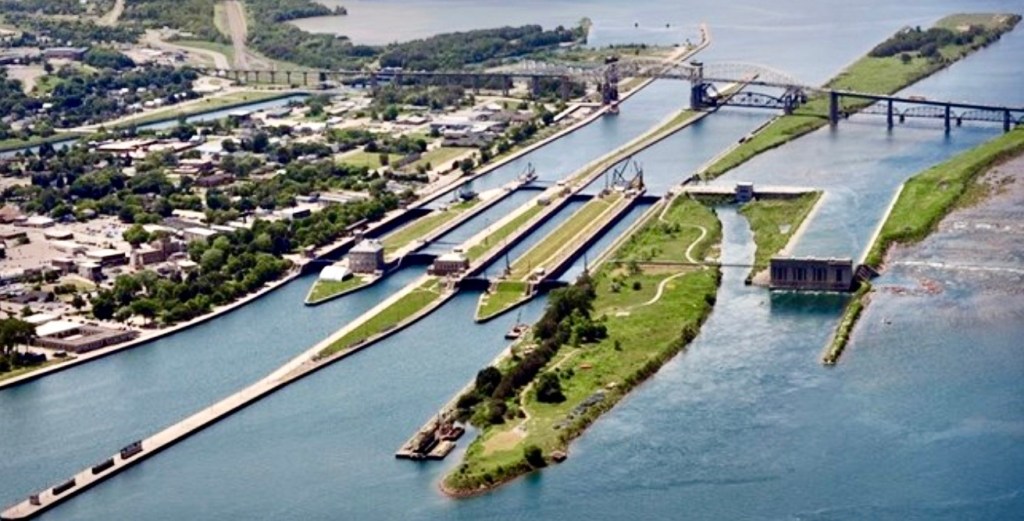
There are two Sault Ste. Maries, one American and one Canadian, straddling the international border. The first American Soo, or Sault Lock opened in 1855; 1,600 men used shovels, wheelbarrows and rock drills to create what was called the St. Mary’s River Canal.. The Erie Canal had opened in 1824 and together, the two projects represented the greatest infrastructural engineering achievements of their time. There had been a Canadian lock as early as 1798, destroyed by the Americans in the War of 1812to disrupt British trade. . Today there is a single small Canadian lock used mainly for recreational and tour boats; the big locks are the U.S. locks maintained by the U.S. Army Corps of Engineers and they are the industrial water link between western Canada and the U.S. with Eastern Canada and the rest of the Great Lakes.
There are two parallel locks — The MacArthur Lock and the Poe Lock and yes, the Mac Arthur Lock, built in 1943 (rapid wartime construction!) , is named after General MacArthur. The Poe Lock from 1896 is named for Colonel Orlando M. Poe, an Army engineer who built it. He had also served with General Sherman in the Civil War and is also noted for several Great Lakes lighthouses (for which I’m pretty sure there may be matchcovers!).
The Poe Lock is by far the larger, 1,200 feet long; there are 13 “thousand-footers” sailing the Great Lakes today.
There are at least 4 former locks, and a new one similar to the large Poe Lock is under construction with completion expected in 2030.
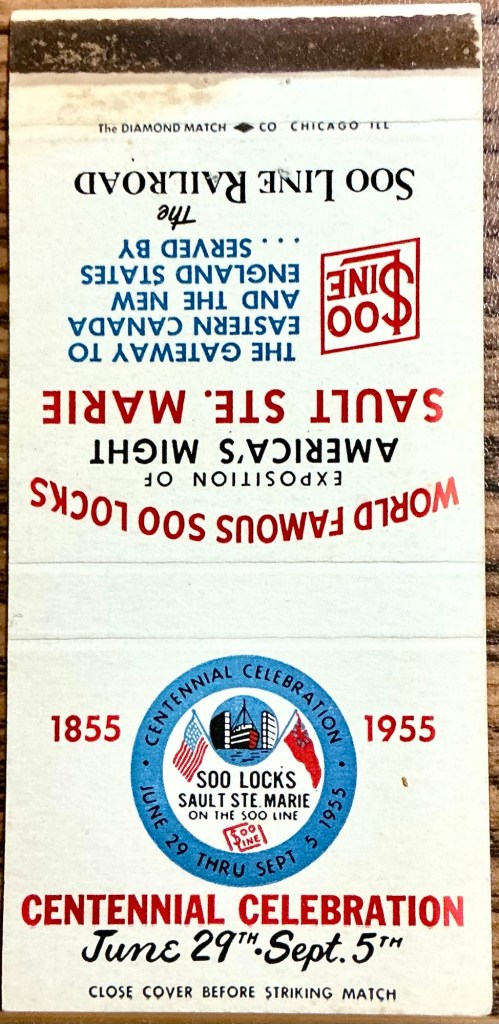
So what this 1955 celebration marked was the centennial of the first state-owned locks bypassing the St. Mary’s River and Falls. It lasted much of the summer of ’55 — this matchcover noted June 29th — September 5th, Labor Day — and they called it “the billion dollar mile”. There was a commemorative 3-cent U.S. postage stamp, a beard-growing contest, a 6-week long pageant and a 10-week exposition in a purpose-built hall. It was a marine fair; it had a midway with entertainment and concessions.
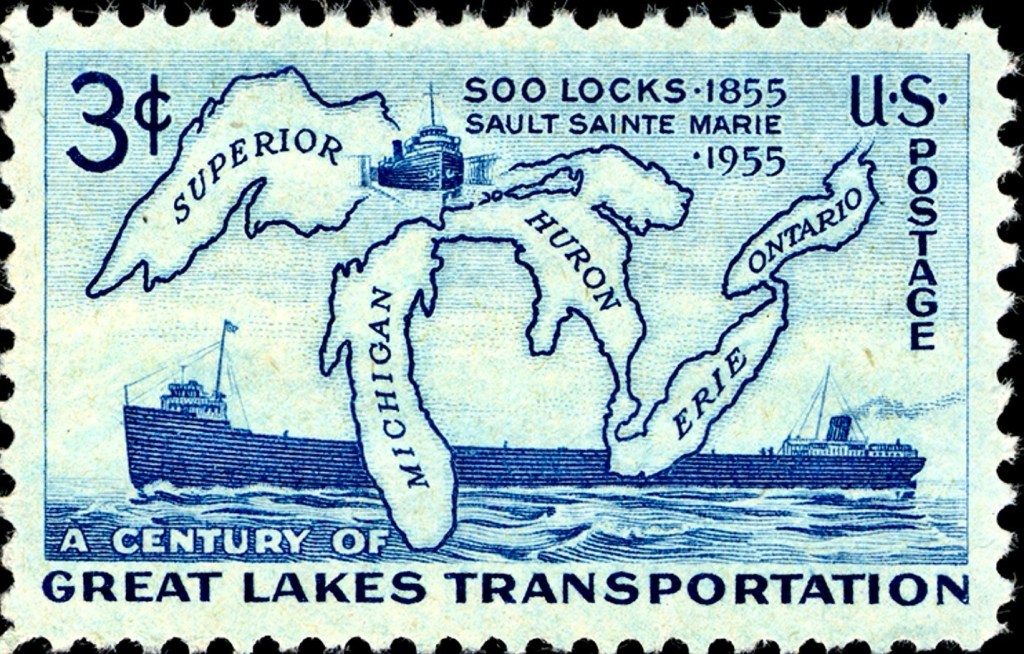
Neither U.S. president Dwight D. Eisenhower nor Canadian Prime Minister Louis St. Laurent attended the centennial; Eisenhower sent official greetingsw and other Canadian parliamentarians showed their faces..Michigan governor G. Mennen Williams was the higheswt-rankign dignitary at opening ceremonies.
Today, the Soo Locks are crucial to the movement of grain, iron ore, copper and more from the west to the industrial east — more than 68 million tons of cargo locked through in 2024-25. The total rise or fall is 21.5 feet.
Now, the matchcover itself — it’s a 30-strike front striker from Diamond Match in Chicago. It’s a very clean design and I love the posturing — “World Famous Soo Locks” and “Exposition of America’s Might”.
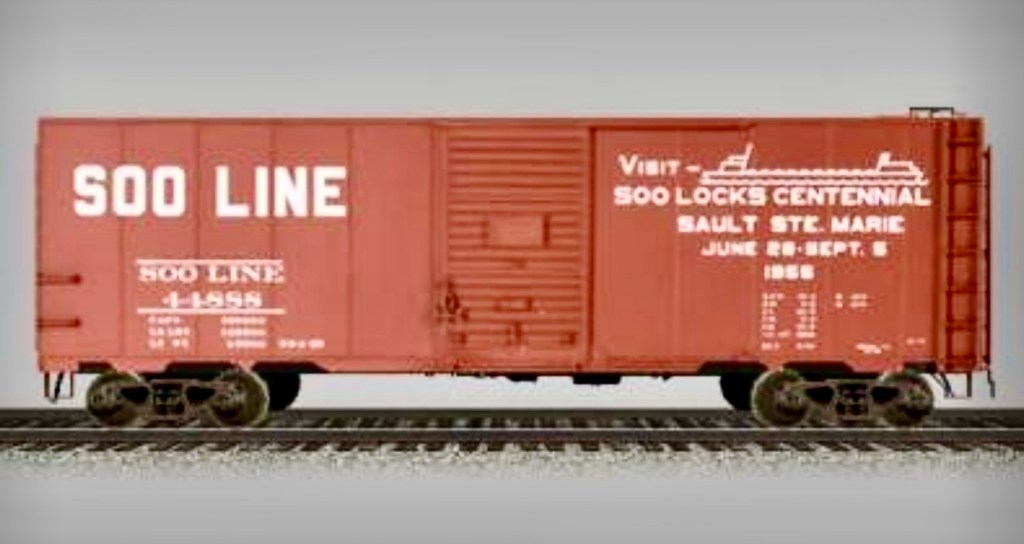
You’ll also note the Soo Line Railroad is on this matchcover (maybe to complicate how you categorize it?) The Soo Line was created in 1883 as a cheaper grain route to the east. It celebrated with a small series of painted boxcars in its standard 40-foot model, a livery that read “Visit Soo Locks Centennial Sault Ste. Marie June 28 – Sept. 5”…

